Carbon Capture Integration for Maritime Operations
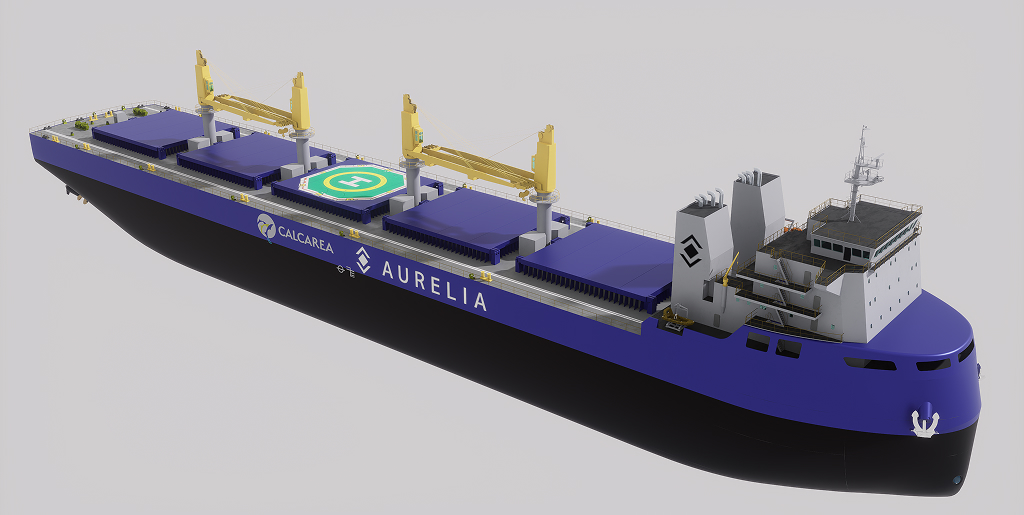
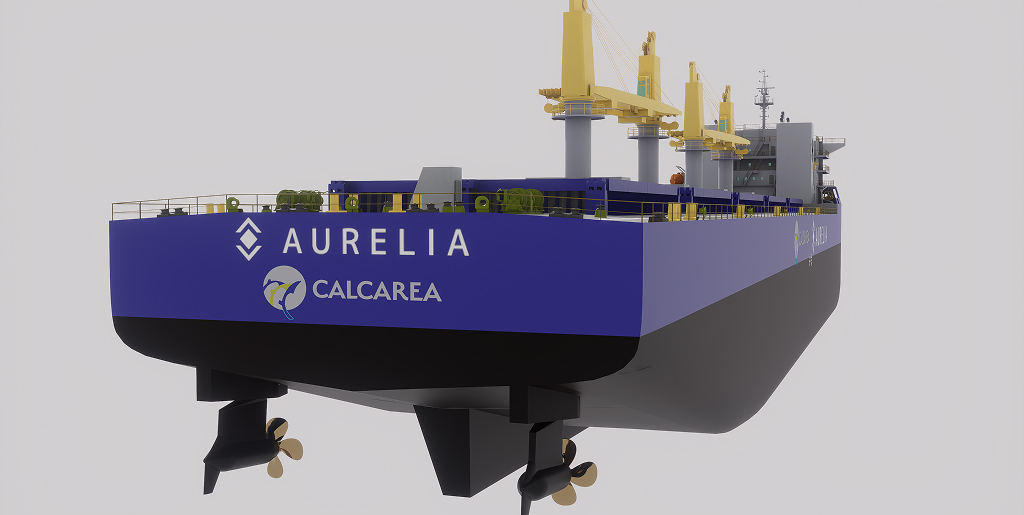
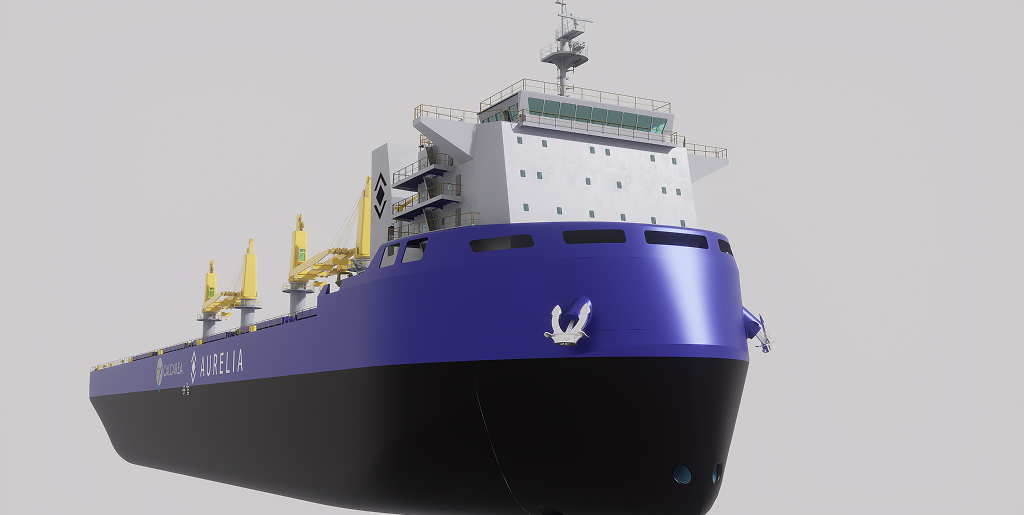
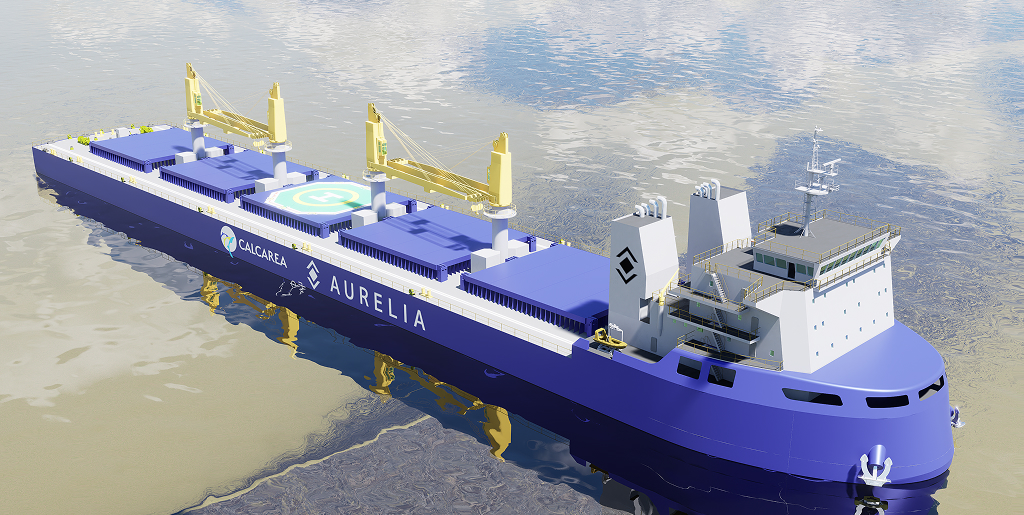
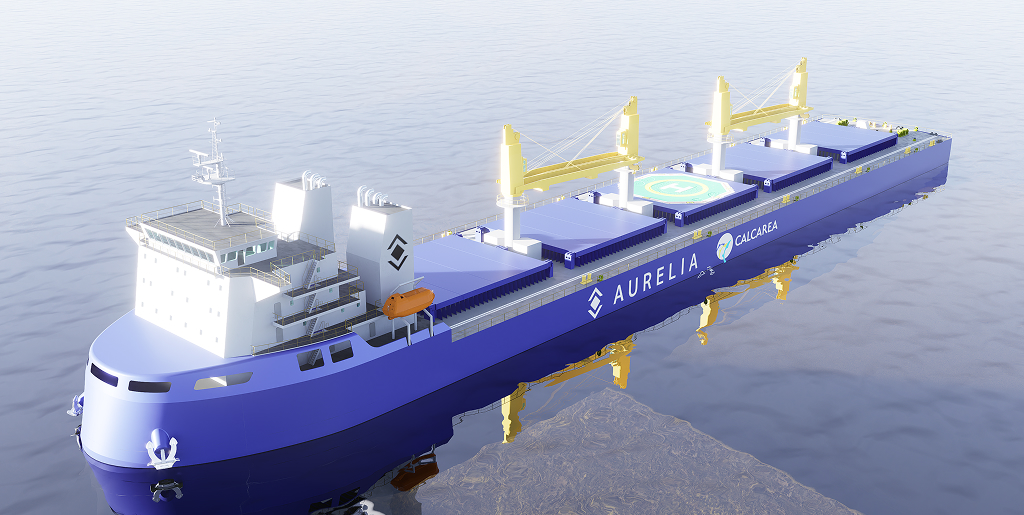
| MAIN DIMENSIONS | |
|---|---|
| Lenghth over all | 199.99 m |
| Lenghth B.P. | 185.00 m |
| Breadth MDL | 32.26 m |
| scantling draft | 13.04 m |
| deadweight | 60000 t |

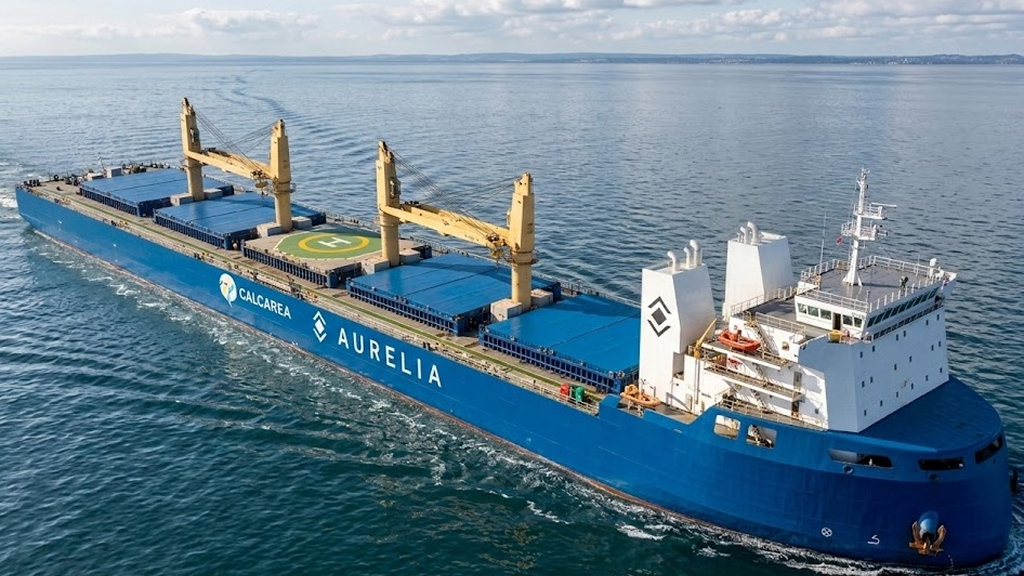
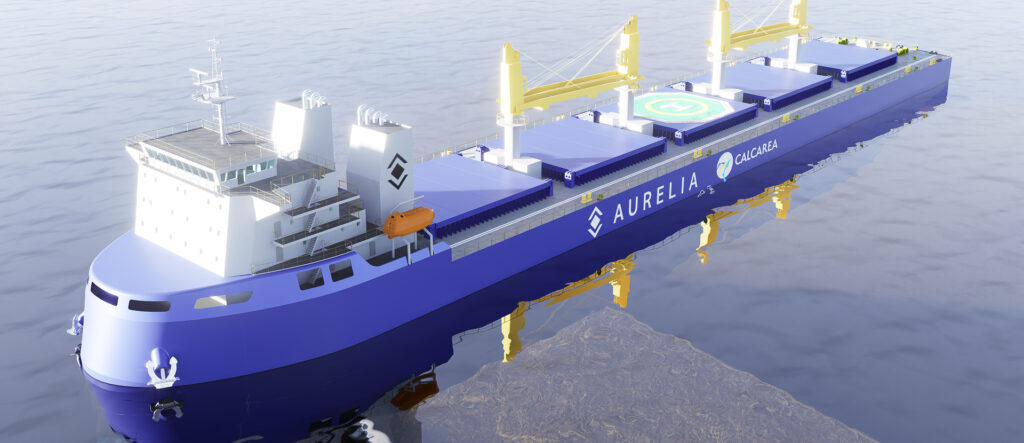
At AURELIA, we explore practical ways to reduce greenhouse gas emissions from shipping. This project evaluates the integration of the CALCAREA CO₂ capture system on a bulk carrier, featuring an innovative newbuild capable of capturing and converting part of its exhaust emissions during operation.
The goal is to integrate carbon capture without compromising vessel safety, operational reliability, or cargo capacity. Combining naval architecture, hydraulic analysis, and energy system design, we demonstrate how carbon capture can work at a concept design level.

The challenge
- Integrating a carbon capture system into a bulk carrier comes with several constraints:
- Limited onboard space for reactors and treatment systems
- High seawater flow needed for CO₂ absorption
- Extra power demand for pumps and blowers
- Interaction with propulsion and electrical systems
The challenge is to operate the system efficiently while minimizing impacts on ship design, stability, and energy consumption.

At AURELIA, we explore engineering solutions that make the maritime industry more sustainable while keeping ship designs practical and economically viable.
Key strategies
System integration
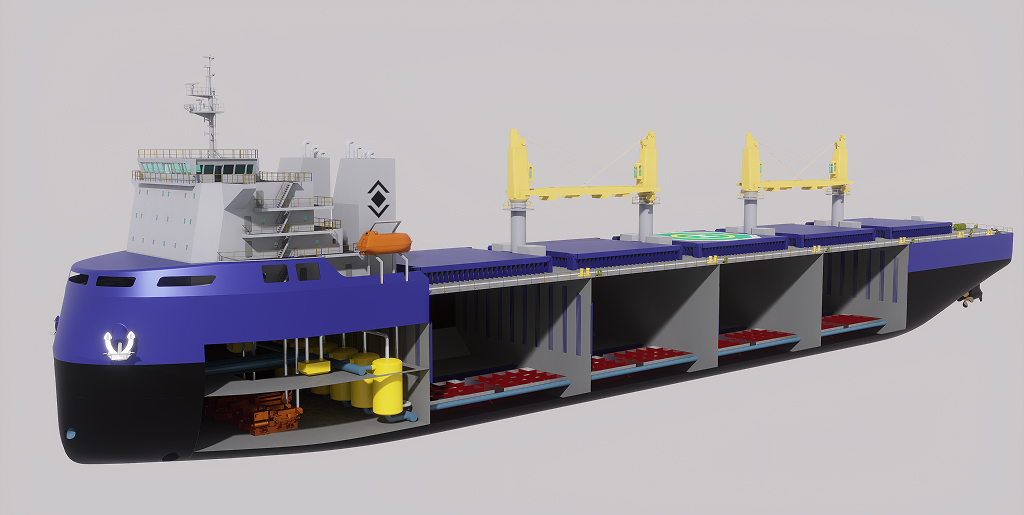
- Reactor placement, seawater intake/discharge, and exhaust routing analyzed within the vessel architecture.
Hydraulic optimization
- Multiple seawater intake configurations tested to maximize passive inflow and reduce pumping power.
Propulsion system comparison
Two-stroke engine with PTO
Diesel-electric propulsion system
Optimized placement
- Reactors, seawater systems, and the engine room moved closer to the bow
- Shorter pipelines improve hydraulic efficiency
CALCAREA TECHNOLOGY
- CO₂ capture efficiency: ~53% (average up to 58%)
- CO₂ conversion to bicarbonate: ~31–34%
- Seawater flow: 10,000 – 20,000 m³/h
- Reactors: multiple parallel units for optimal gas–liquid contact
- Packed bed system: limestone tanks in the vessel double bottom
The system converts CO₂ into dissolved bicarbonate, which can be safely discharged into the sea — no onboard CO₂ storage required.
Optimized Design Concept
The optimized vessel configuration includes:
- Bow-located seawater intake for better passive inflow
- Shorter piping between sea chests, reactors, and exhaust
- Diesel-electric propulsion to meet power demands
- Electric pumps and blowers powered by onboard generators
Benefits
- Reduced water pumping demand
- Higher operational efficiency than current market
- Lower overall CO₂ emissions than conventional designs
Why It Matters
Shipping is under pressure to reduce emissions under the IMO Net Zero framework, targeting near-zero emissions by 2050.
Onboard carbon capture technologies like CALCAREA could:
- Significantly cut vessel emissions
- Help operators comply with future carbon pricing mechanisms
.
The feasibility analysis indicates that, under certain carbon pricing scenarios, the investment in a system such as CALCAREA could potentially be recovered within approximately three years, depending on regulatory developments and carbon cost assumptions.